
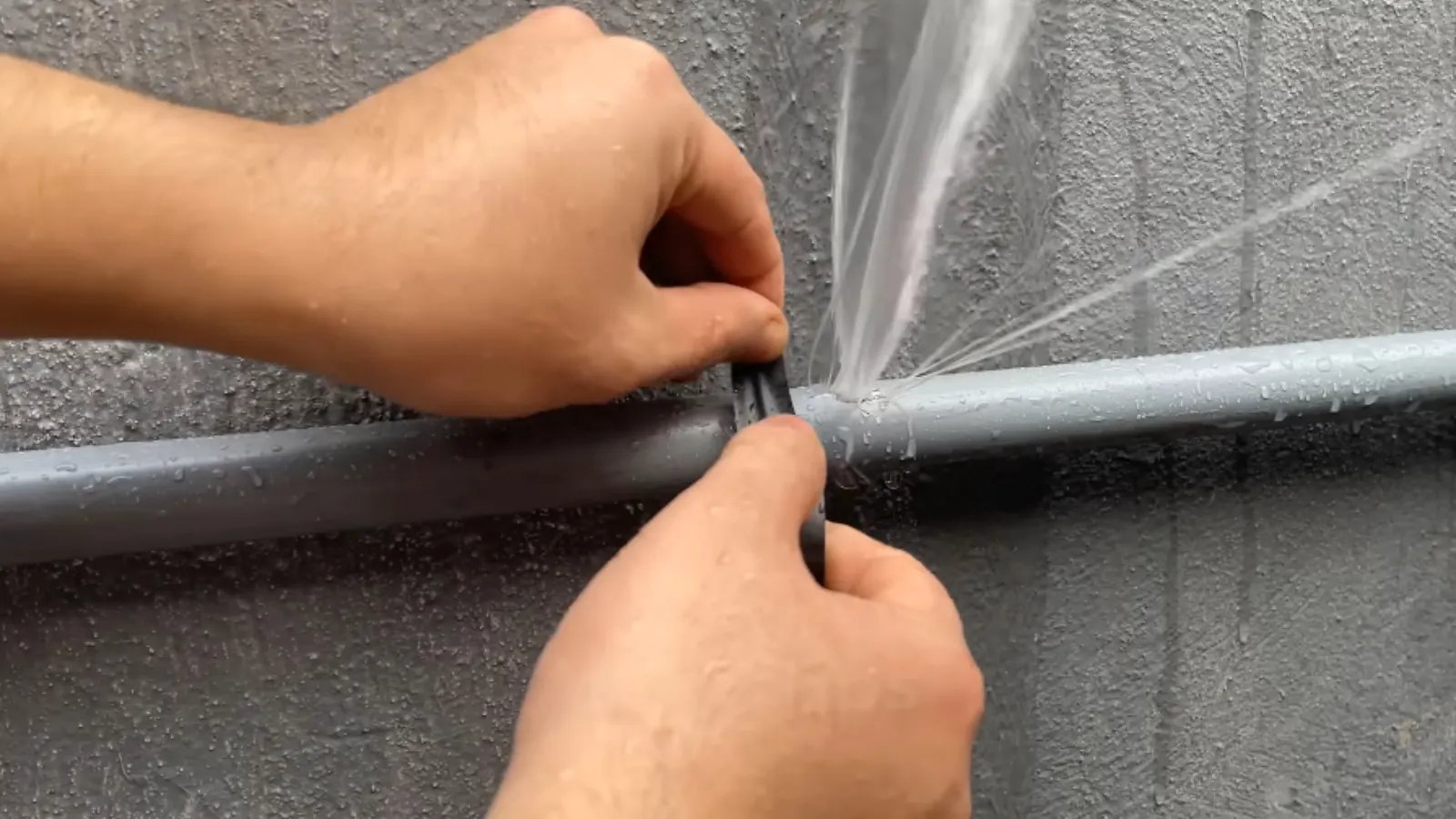
Why the damage shows up after the thaw
Water expands about nine percent when it freezes, and that force can split copper or plastic pipe along its length. While the ice stays in place, the split is plugged. When it melts, water flows through the crack.
That is why plumbers see a wave of calls a day or two after a freeze, when temperatures rise and the first leaks appear. A house that seemed fine during the cold can flood once it warms.
What to do, in order
If water appears, close the main and call. Do not run water to see what happens, because every minute of flow adds to the damage.
Find the main
Locate the main shutoff before you run any water, and keep it closed until you have checked.
Look for frozen pipes
Check pipes in garages, crawlspaces, exterior walls and under sinks for frost, bulges or no flow.
Thaw safely
Open the faucet and warm the pipe with a hair dryer or heat lamp. Never use an open flame.
Open the main slowly
Turn the water on gradually and check ceilings, walls and floors for leaks.
What the repair involves
| Finding | What it means | Repair |
|---|---|---|
| Split along the pipe | Classic freeze damage | Cut out the section and fit new pipe |
| Cracked fitting | Water froze inside the joint | Replace the fitting and test neighboring joints |
| Burst hose bib or spigot line | Water left in an outdoor line | Replace the spigot, consider a frost-free model |
| Several splits in different places | A widely exposed system | Repair, then discuss insulation or repiping |
| Water behind a wall or ceiling | Hidden leak | Locate the source before opening the wall |
Water spraying after a thaw?
Shut off the main and call. The 24/7 line is open.
Document and claim
- Photograph and video every wet area and the burst pipe before cleanup.
- Call your insurer. Coverage for freeze damage varies, so read your policy.
- Keep receipts for emergency repairs and drying equipment.
- Ask for a written description of the repair, since insurers often want one.
Prevent the next one
Insulate pipes in garages, crawlspaces and exterior walls, and disconnect hoses before the first freeze. Know where your main shutoff is, and test it once a year so it does not stick when you need it.
On the coldest nights, let faucets on exterior walls drip and open cabinet doors under sinks. Our burst pipe repair team handles the break itself, and leak detection finds water you cannot see.
If the same house splits pipes again and again, ask about the larger fix on our repiping page.
Checking pipes you cannot see
Pipes inside exterior walls, above garage ceilings and in crawlspaces are the ones people miss. Listen for the sound of running water when every fixture is off, check the ceiling below an upstairs bathroom and look for new stains or damp insulation.
The water meter is a good test. With every tap off, a moving dial means water is escaping somewhere, and a leak survey can find the spot without opening the wall.
When to call a plumber instead of waiting
Call right away if water is visible, if the meter runs with taps off or if a ceiling or wall is stained or soft. A small drip behind a wall can saturate insulation and framing in a day or two.
Also call if a pipe is frozen and you cannot reach it. A plumber can thaw it and check the joints before pressure returns, which is cheaper than finding the split after water has been flowing.
What to tell your insurance adjuster
Describe when you noticed the damage, what you did to stop the water and what the plumber found. Share your photos and receipts, and keep any damaged material until the adjuster has looked at it if it is safe to do so.
Ask what your policy covers for freeze damage and for drying and repairs. Policies differ, so get the answer from your insurer and not from a neighbor.
Preventing the next freeze
Pipes in exterior walls, crawlspaces, garages and attics are the usual victims. Insulate what you can reach, seal gaps where cold air enters and disconnect garden hoses before a hard freeze.
On a very cold night, open the cabinet doors under sinks on exterior walls and let a faucet drip. Moving water is harder to freeze, and a small drip costs far less than a split pipe.
One more thing to check
Document the damage before you clean up. Photograph the pipe, the wet areas and any ruined belongings, and write down the time you shut the water off.
Then open cabinet doors, run fans and move furniture away from wet walls. Quick drying lowers the risk of mold, which can start within a couple of days in a damp, closed space.
Wilsonville note: the 2024 storm and permit rules
The January 2024 winter and ice storm in the Portland metro led to a heavy run of burst-pipe calls, according to OPB reporting. Wilsonville is about 17 miles from downtown Portland, so a freeze that reaches the metro reaches the city.
Permit rules differ by city. Sherwood's building page says an emergency repair of freeze-damaged or leaking concealed piping needs a permit if the new piping exceeds 3 feet, and Wilsonville's portal page does not say, so ask the Wilsonville building division about a larger repair. Our Sherwood page covers how that rule affects a repair there.
Frequently asked questions
Ice plugs a split while it is frozen. When it melts, water flows through the crack and the leak appears.
Yes, with a hair dryer or heat lamp and a faucet left open. Never use an open flame.
Turn it on slowly and check for leaks. If you see water, shut it off and call.
It varies by policy, so read yours and call your insurer. Document the damage and keep receipts.
Disconnect hoses, insulate exposed pipes, know your main shutoff and let exterior-wall faucets drip. The 2024 storm showed how quickly calls pile up across the metro.