
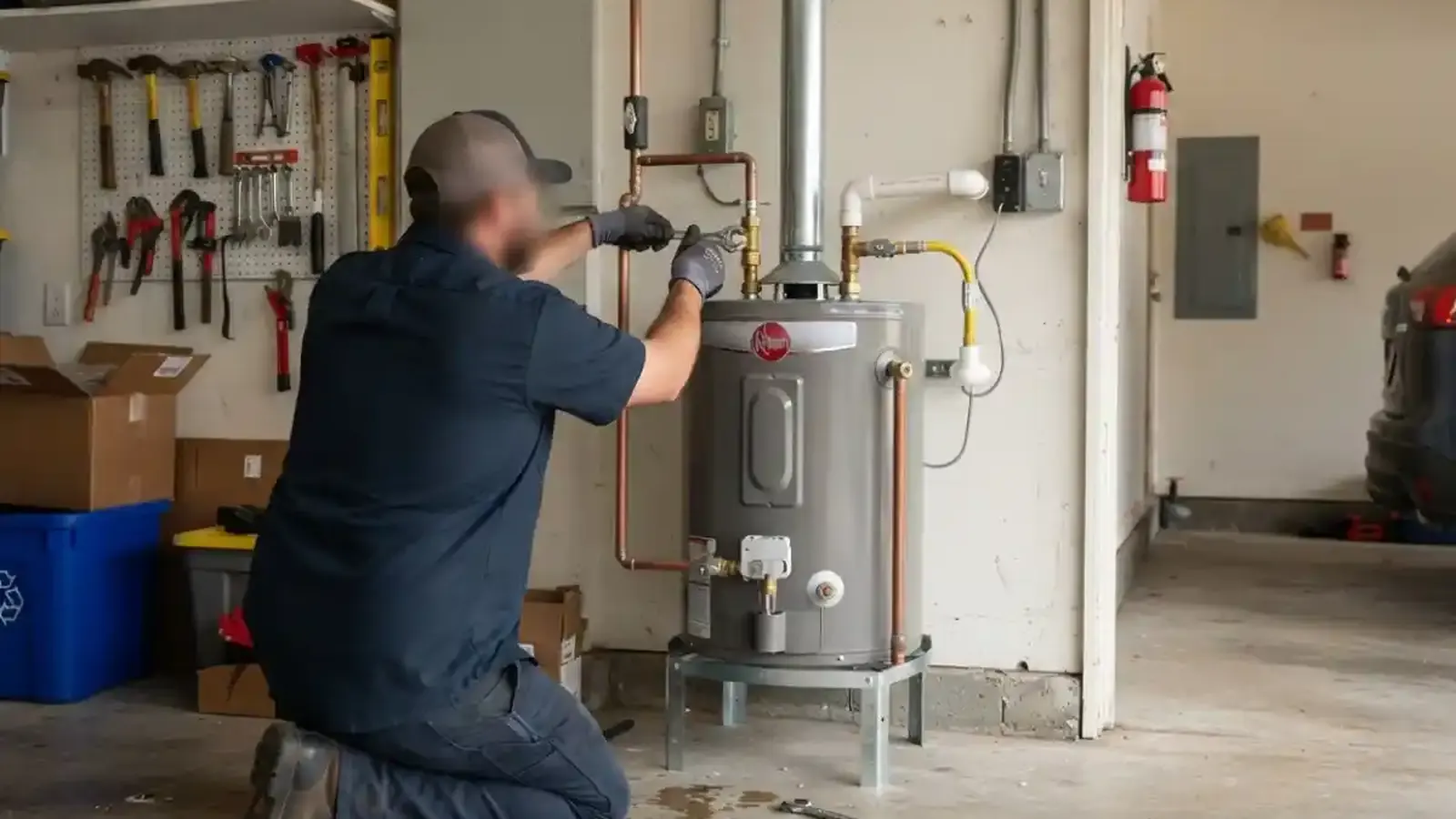
How a heat pump water heater works
A heat pump water heater uses a small compressor and fan to move heat from the surrounding air into the tank. Because it moves heat and does not generate it, it uses much less electricity than a standard resistance tank for the same hot water.
The unit cools and dries the air around it, and it needs enough open space to draw warm air. Many models also have an electric element for high demand, so you can choose a mode that trades savings for speed.
Side by side
| Question | Standard electric tank | Heat pump tank |
|---|---|---|
| Running cost | Higher electricity use | Much lower electricity use for similar hot water |
| Purchase price | Lower | Higher |
| Space | Small footprint | Needs open air around it, often a garage or basement |
| Noise | Quiet | A fan and compressor hum, similar to a dehumidifier |
| Condensate | None | Needs a drain for condensate |
| Cool air | None | Cools the room around the unit |
Thinking about a water heater upgrade?
Call and describe the space. A technician says whether a heat pump unit fits.
What a heat pump water heater needs
- Open air around the unit, as the manufacturer specifies, and not a small closet with a closed door.
- A 240-volt circuit sized to the unit.
- A condensate drain or a safe place for the water to go.
- A location where cool, dry exhaust air is not a problem.
- Room for service access on all sides the manufacturer lists.
When a standard tank still makes sense
Heat pump fits when
- You have a garage, basement or large utility room
- You want lower running costs and can pay more upfront
- Your electrical panel has room for the circuit
A standard tank fits when
- The space is a small closet
- You want the lowest purchase price
- You need very fast recovery for a big household
Our water heater replacement page covers a swap when a tank has failed, and water heater installation covers planning a new location.
Modes and what they trade
Most heat pump water heaters offer a few modes. An efficiency mode uses only the heat pump and saves the most electricity, while a hybrid mode adds the element when demand is high and an electric mode runs the element alone for the fastest recovery.
A household that uses hot water steadily can live in efficiency mode, and a house that has a morning rush may prefer hybrid. Some units have a vacation mode that drops the temperature when no one is home.
Where to put one
- A garage or basement with open floor space and no bedroom wall behind it.
- A utility room with a door that stays open or a vent that gives the unit air.
- A spot near an existing drain for the condensate, and near a 240-volt circuit.
- Away from areas that need to stay warm, since the unit cools the air around it.
What a replacement visit checks
A short visit answers whether a heat pump unit fits, and an honest plumber will tell you when a standard tank is the better choice for your space.
- The size of the existing tank and the household's hot water use.
- Available air space and door or vent options.
- Electrical capacity and the breaker size.
- Condensate drain location and slope.
- Piping, shutoff valves and the relief valve discharge.
Myths worth clearing up
One myth is that heat pump water heaters cannot supply enough hot water. In efficiency mode recovery is slower, and hybrid and electric modes add capacity when needed.
Another is that they only work in warm climates. They work in mild conditions, and the Portland area has mild winters, but a very cold space reduces efficiency, so a heated garage or basement is a better home than an unheated shed.
Running costs and upkeep
A heat pump unit moves heat from surrounding air into the tank, so it uses less electricity than a standard electric element for the same hot water. The saving depends on the space, the settings and how much hot water the household uses.
Upkeep is modest. Clean the air filter, check the condensate drain and flush the tank on the maker's schedule. Ask your installer for the interval, since it varies by model.
One more thing to check
Noise is a point to consider. A heat pump unit has a fan and a compressor, and it sounds like a quiet dehumidifier. Placing it in a basement or garage keeps the sound away from bedrooms.
Ask about the warranty on the compressor and the tank separately, since they can differ. A longer warranty on the parts that fail most is worth more than a long warranty on the tank alone.
Wilsonville note: space and permits
Space is the first question in many Wilsonville homes. Villebois mixes single-family homes, condos, row homes and apartments, and attached homes often have small closets where a heat pump unit has little air to draw from.
Permit rules differ by city. Sherwood's building page says permits are required to replace water heaters, and Wilsonville's portal page does not say, so ask the Wilsonville building division before you swap one. Incentives for efficient equipment change over time, so ask your electric utility what is offered at the time you buy. We also serve Sherwood, where the permit rule is clear.
Frequently asked questions
It can be, if you have the space and plan to run it for years. It costs more upfront and uses much less electricity than a standard tank.
They work in mild conditions and draw less efficiently when the surrounding air is cold. A heated or temperate space is best.
It makes a fan and compressor hum similar to a dehumidifier, so avoid placing it near a bedroom wall.
Only if the manufacturer's air space requirements are met. A closed closet usually is not enough.
The city's portal page does not say, so ask the Wilsonville building division. In Sherwood, replacing a water heater needs a permit.