
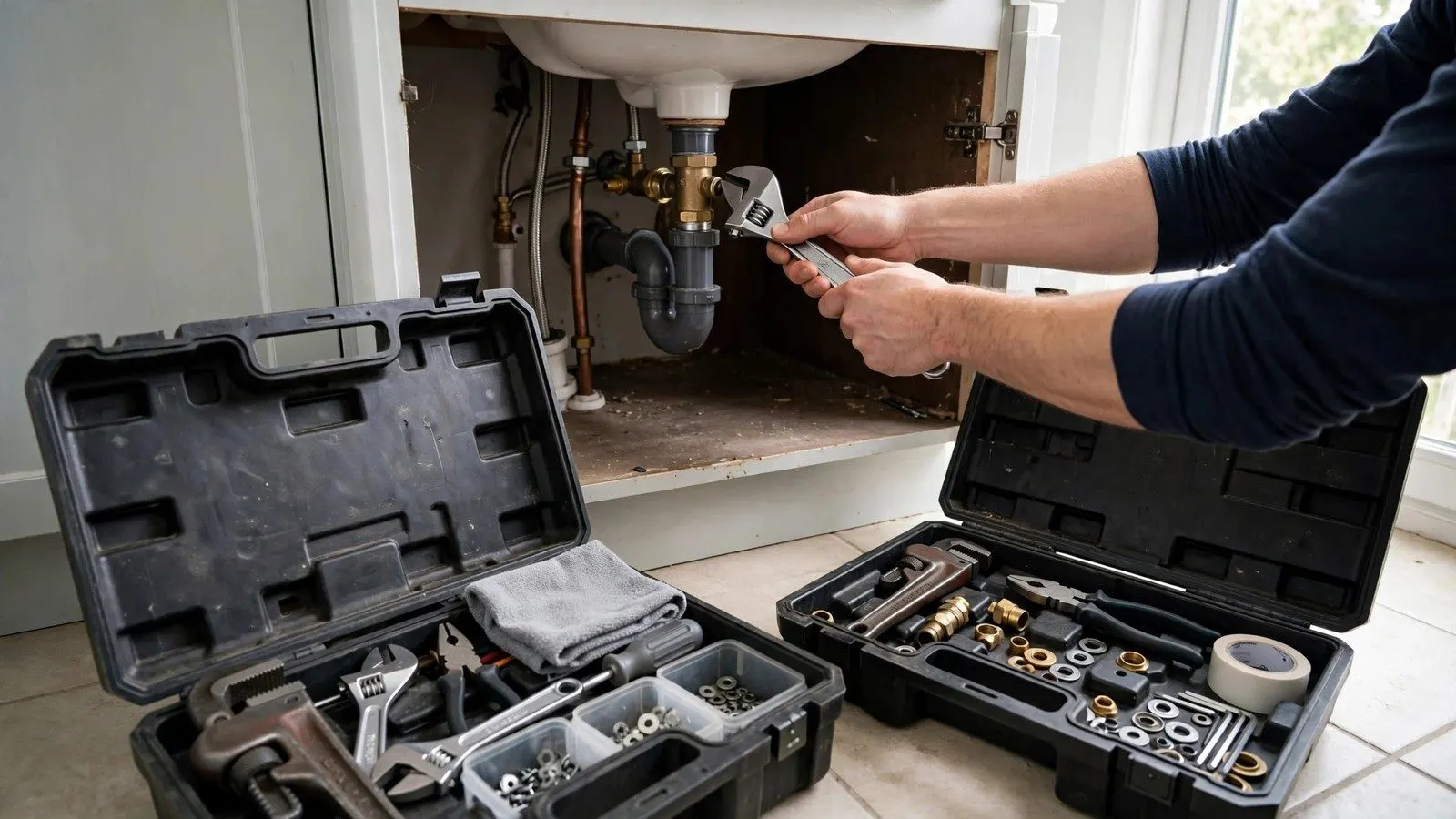
What moves the price of plumbing installation
| Factor | Why it matters | Question to ask |
|---|---|---|
| Scope of work | A single fixture swap is small, and a new bathroom needs supply, drain and vent runs | What exactly is included? |
| Access | Open framing is quick, and finished walls and slabs are not | Will walls or floors need to be opened? |
| Fixtures and materials | Your choices drive a large share of the cost | Who supplies the fixtures? |
| Existing pipe | Old pipe may need replacing at the tie-in | What condition is the pipe you will connect to? |
| Permits and inspection | Some work needs a permit and an inspection | Is the permit included? |
| Finish work | Drywall, paint and tile are separate trades | Who handles patching? |
What a clear quote should include
- A written scope that lists what will and will not be done.
- A price for labor and parts, or a clear explanation of how it is calculated.
- Who pulls any required permit and who pays for it.
- What happens if the crew finds hidden damage or old pipe.
- A start date and how long the work is expected to take.
Want a clear price for your project?
Call and describe it. A technician gives a clear price before work starts.
Comparing quotes fairly
A low price may mean
- A narrower scope than the other quote
- Fixtures or materials that are not included
- No permit or finish work
A higher price may mean
- A larger scope or better materials
- Permit and inspection included
- Repairs to old pipe at the tie-in
Ask each plumber to price the same scope and compare line by line. Our plumbing installation page lists what projects we handle, and a planned heater swap is covered under water heater installation.
Ways to keep a project on budget
Decide the scope before you ask for quotes. A plumber cannot compare prices fairly when one job includes a new tub and another assumes the old one stays.
Choose fixtures early, because last-minute changes mean return trips and delays. Standard layouts also cost less than moving drains and vents, so ask what a different layout would add.
Ask what happens if the crew finds something unexpected, such as old pipe at the tie-in. A clear quote explains how that is handled, and a good plumber tells you before doing extra work.
Questions to ask before you say yes
- Is the plumber licensed, and can I check it with the state?
- What is included, and what is not?
- Who pulls the permit, and when is the inspection?
- What is the payment schedule?
- How long will the work take, and what happens if it runs over?
Why a written scope protects you
A scope in writing is the simplest protection both sides have. It says what the plumber will do, what you will provide and what happens if the plan changes.
If a price changes after work begins, the scope shows whether the change is a surprise or an addition you asked for. Keep a copy with your records.
Hourly rate or flat price?
Some plumbers quote a flat price for a defined scope, and others bill by the hour plus parts. A flat price protects you from a job that runs long, and an hourly rate can be fairer when the scope is unclear.
Whichever you choose, ask for an estimate of hours or a cap, and how parts will be priced. A plumber who explains the method before you sign is easier to work with than one who gives you a single number and no reasoning.
Ways to keep a project on budget
Decide on fixtures before the plumber starts, because a change after the rough-in means reopening walls. Bring your own fixtures only if the plumber agrees, since a part supplied by you may not carry a warranty.
Group related work into one visit where you can. A second trip for a small job usually costs more than adding it to a visit already planned.
One more thing to check
Material choices matter more than most people expect. Copper, PEX and CPVC differ in price and in how they are installed, and the right choice depends on the job and the building.
Ask the plumber why they recommend a material. A reasoned answer shows they have thought about your house and not just reached for what they always use.
Keep a copy of the product names and model numbers of what goes in. Warranty claims and later repairs go much faster when the paperwork names the exact part, the install date and the person who did the work, so keep it with your home records.
Finally, ask how long the quote is good for, because material prices and schedules can shift between the visit and the start date.
Wilsonville note: permits and checking a plumber
Wilsonville handles permits through its online portal for building, plumbing, mechanical and fire work. The portal page does not say when a permit is required, so ask the Wilsonville building division about your project and who will pull it.
You can check any Oregon contractor with the Construction Contractors Board contractor license search, and the Building Codes Division has a license holder search for plumbers. Work follows the Oregon Plumbing Specialty Code. In Sherwood, the city's building page says permits are required to replace water heaters and underground piping, a useful reminder that rules differ by city. See our Sherwood page for more.
Frequently asked questions
Scope, access, fixtures, permits and finish work differ between quotes. Comparing line by line shows where the difference sits.
Many do, depending on the work and the city. Ask the Wilsonville building division, which runs the online permitting portal.
It can save money but changes who is responsible if a part is defective. Ask the plumber how they handle supplied fixtures.
Hidden damage, old pipe at the tie-in and changes to the scope. A clear quote explains how those are handled.
Use the Construction Contractors Board contractor license search and the Building Codes Division license holder search.