
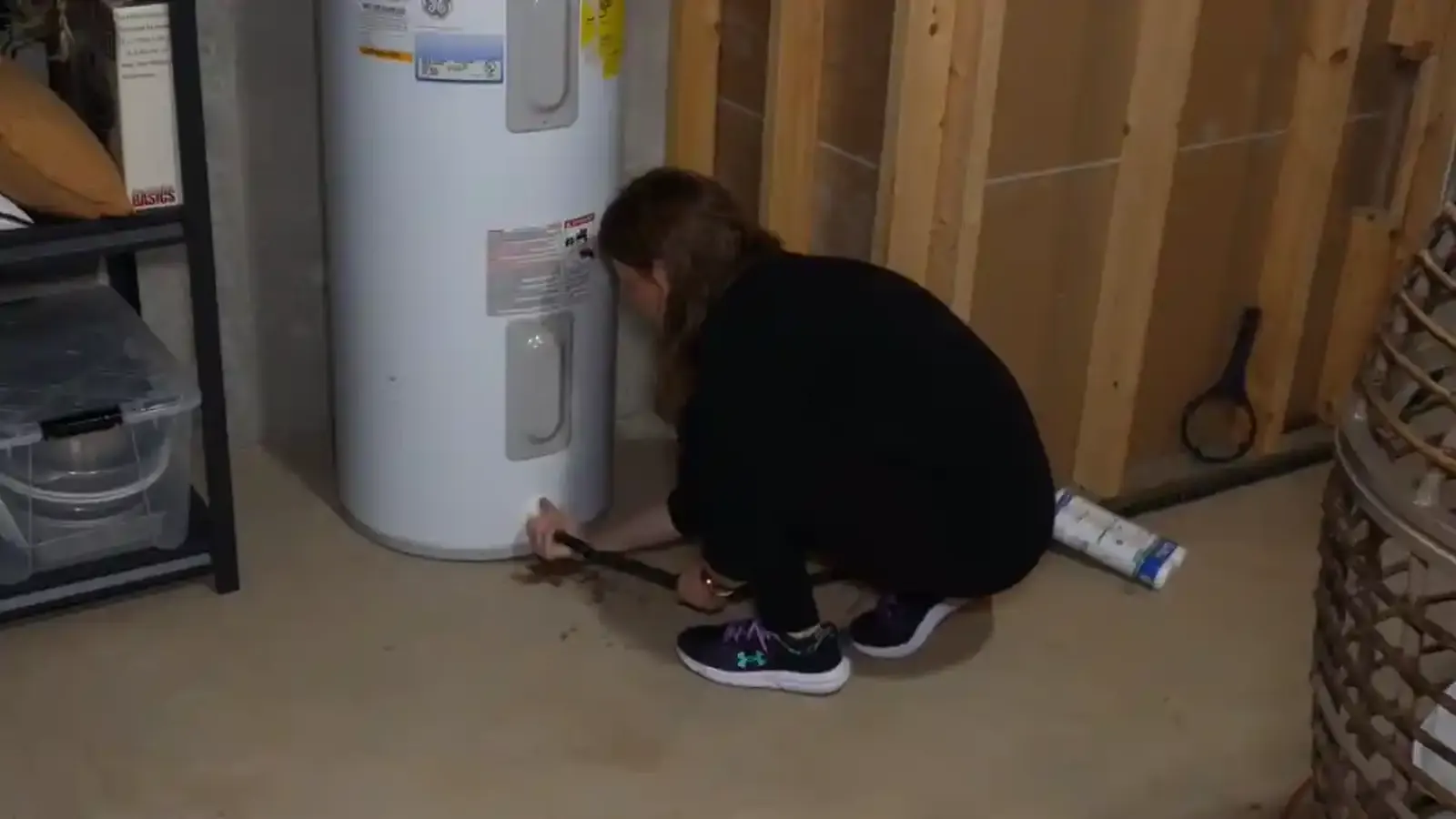
What a temperature and pressure relief valve does
The temperature and pressure relief valve, often called the T&P valve, sits on the top or side of the tank. If the water gets too hot or the pressure inside climbs too high, a spring-loaded seat lifts and lets water out through a discharge pipe.
A tank is a sealed vessel, and heat makes water expand. Without a working relief valve, a stuck thermostat or a closed system can push pressure past what the tank can take, which is why the valve is a safety device and never a nuisance part to cap or plug.
Why a relief valve drips, and what to do about it
The first row is the one most people miss. A valve that drips only when the heater runs often points to pressure in the house, and a new valve will start dripping again until the cause is fixed.
| What you see | Likely cause | Best next step |
|---|---|---|
| A slow drip from the discharge pipe, now and then | Thermal expansion pushing pressure up when the heater runs | Test house pressure and check the expansion tank |
| Constant dripping or a steady trickle | Worn or dirty valve seat | Replace the valve |
| Water discharging in bursts, with hot water | Overheating from a failed thermostat | Turn the unit off and call a plumber |
| Leak at the valve threads | Loose or damaged connection | Reseal or replace the valve |
| Valve that sticks or does not lift when tested | Mineral buildup | Replace the valve |
How a replacement is done
A plumber shuts off power or gas to the heater and closes the cold water supply, then relieves pressure and drains a few gallons so the water level drops below the valve. The old valve comes out with a proper wrench, thread sealant goes on the new threads and the new valve is tightened without crushing the tank fitting.
The new valve must be rated for the tank, usually with a pressure rating matching the tank's own limit and a temperature rating of 210 degrees. The discharge pipe should be the same size as the valve outlet, run downward with no valves or caps, and end somewhere safe, because the water that comes out is hot enough to scald.
- Never cap, plug or restrict a relief valve or its discharge pipe.
- Test the valve once a year by lifting the lever briefly with a bucket under the pipe, and replace it if it does not reseat.
- Do not work on a hot tank. Let the water cool and shut off power or gas first.
- A valve that has been leaking for a long time may have scale or rust that suggests the tank is near the end of its life.
Relief valve dripping or discharging?
Turn the heater off, shut the cold supply and call. The 24/7 line is open.
Repair, replace the valve or replace the heater
Replace only the valve
- The tank is young and sound
- House pressure tests normal
- The valve is old, sticky or weeping
Look further
- The tank is old or rusty
- The valve drips only when the heater runs
- You have had several repairs already
Our water heater repair visit tests pressure before swapping the valve, and when the tank itself is past saving, water heater replacement is the honest answer.
Questions to settle before you start
Before a valve swap, work out why it is leaking. A valve that is merely old is a quick, cheap job, and a valve that opens because pressure or temperature is too high is a warning that something else is wrong.
Check the thermostat setting, which most manufacturers suggest keeping near a moderate household temperature, and ask whether the home has a pressure reducing valve or a check valve that makes the water system closed. A closed system needs an expansion tank, and without one the relief valve takes the strain every time the heater cycles.
Safety points before you start
Turn off the power or the gas, close the cold water supply and let the water cool before you touch the valve. Open a hot tap to relieve pressure, and keep the discharge pipe pointed at a safe drain.
Never cap or plug the discharge pipe, and do not replace the valve with one that has a different pressure rating. If the new valve leaks or you are unsure of the rating, call a plumber.
One more thing to check
Test the valve once a year by lifting the lever briefly and letting a little water run into the discharge pipe. If it does not reseat and keeps dripping, the valve needs replacing.
A valve that drips often can also mean the water pressure in the house is too high or the tank has an expansion problem. A replacement will not fix those, so ask a plumber to test the pressure.
Wilsonville note: permits and who to ask
Wilsonville handles permits through an online portal for building, plumbing, mechanical and fire work, and the page does not say when a permit is required. Ask the Wilsonville building division whether a like-for-like valve swap needs one before you start.
Across the line in Sherwood, the city's building page says permits are required to replace water heaters, while ordinary minor repairs of existing accessible fixtures, parts and appliances do not need one. That is a useful guide to how a small valve swap and a full heater replacement are usually treated, though you should confirm with your own city. Our Sherwood service page explains the rules we have seen there.
Frequently asked questions
It is possible for a confident homeowner, but it involves hot water, pressure and a safety device. If you are not sure how to shut down and drain the tank safely, hire a plumber.
Once a year is a common recommendation. Lift the lever briefly with a bucket under the discharge pipe and check that water flows and the valve reseats without dripping.
Heating cycles increase pressure, and a closed system has nowhere for the extra volume to go. An expansion tank usually fixes that.
A steady stream of hot water, or a valve that discharges and does not stop, is. A slow drip can wait for a visit, but it should not be ignored.
The city's permit portal page does not say, so ask the Wilsonville building division. A small like-for-like swap is often treated differently from replacing the heater.