
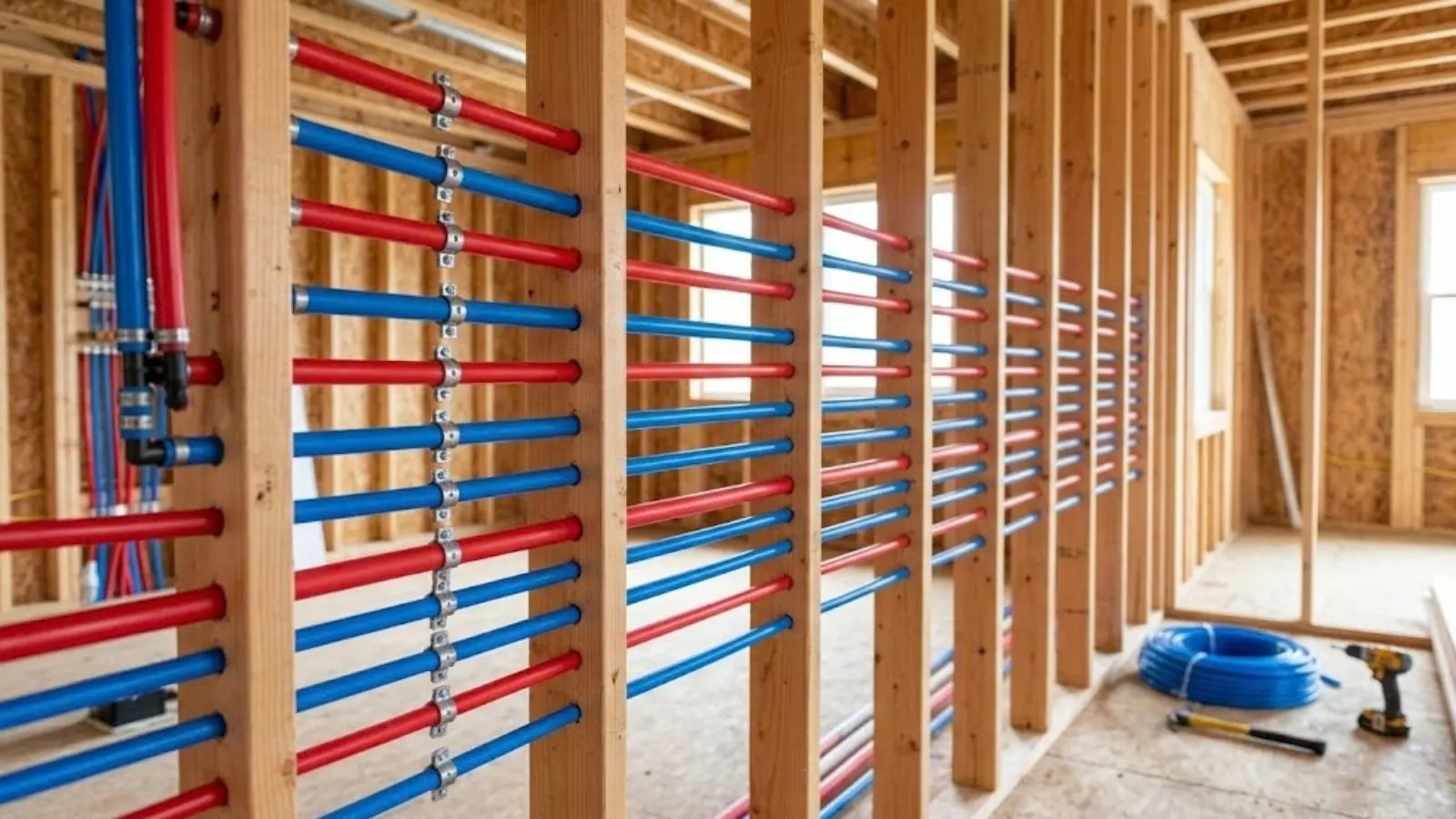
Era by era: what pipe you may find
Materials in each era vary by builder and by later repairs, so treat this table as a starting point and not a rule. A camera or a pipe inspection tells you what is actually there.
| Home era | Typical supply pipe | Typical drain pipe | What to check |
|---|---|---|---|
| Before about 1950 | Galvanized steel, sometimes older materials | Cast iron or clay | Corrosion, low pressure, drain scale and root intrusion |
| About 1950 to 1980 | Copper, some galvanized | Cast iron, some plastic | Pinhole leaks, old valves, drain condition |
| About 1980 to 2000 | Copper, some early plastics | Plastic | Fittings, water heater age and shutoff valves |
| After about 2000 | PEX or copper | Plastic | Workmanship, fittings and warranty issues |
What age does to plumbing
- Galvanized steel rusts from the inside, which narrows the pipe and lowers pressure.
- Cast iron drains scale and crack, and roots find the joints.
- Old shutoff valves seize, so they fail the one time you need them.
- Original water heaters have usually been replaced, and the piping around them may be older than the tank.
- Remodels leave mixed materials, and the joints between them are weak points.
Not sure what pipe your home has?
Call and describe the house. A technician can inspect and tell you.
What to do with an older house
Check now
- Find and test the main shutoff
- Look for corrosion at joints and valves
- Watch for low pressure or rusty water
- Ask about a sewer camera inspection
Plan for later
- Budget for a repipe if galvanized pipe is present
- Replace old shutoff valves before they fail
- Keep records of repairs and upgrades
A repiping assessment shows whether a house needs more than spot repairs, and a sewer inspection shows the drain line.
Questions to ask when buying an older home
A seller may not know every answer, which is a reason to ask a plumber to look before you commit. A short inspection costs far less than a surprise repipe or a sewer dig after closing.
- What pipe material is visible near the water heater and under sinks?
- Has the sewer line ever been inspected with a camera?
- Have any pipes been replaced, and where are the records?
- Is water pressure strong at every fixture?
- Where is the main shutoff, and does it work?
Why age alone is not the whole story
A home built in one decade may have had its pipes changed in another. A galvanized supply line may have been swapped for copper, or a failed section replaced with plastic, and a camera or inspection shows which.
Water chemistry, usage and installation quality matter as much as the year on the deed. Treat the era as a starting point, and let the inspection set the plan.
Upgrades that help a home of any age
- Replace old, stiff shutoff valves under sinks and toilets before they fail.
- Add a drain pan and a discharge pipe under the water heater.
- Swap old rubber supply hoses for braided stainless lines.
- Test house pressure and fit a regulator if it runs high.
- Know where the main shutoff is and test it once a year.
Pipe materials by era
Older homes may have galvanized steel, which corrodes from the inside, or cast iron drains, which crack with age. Mid-century homes often have copper, and newer builds use plastic such as PEX and PVC.
You can often tell by looking at exposed pipe in a basement or crawlspace. A magnet sticks to steel and iron but not to copper or plastic, which gives you a quick first clue before a plumber confirms it.
One more thing to check
If you are buying an older house, ask for a sewer camera inspection and a pressure test on the supply line. These two checks reveal most of the expensive surprises in an aging system.
Keep any report you receive. It gives you a baseline, and a plumber can compare it with later findings to see how quickly a pipe is changing.
A short written note of what you learn today will be valuable to the next owner, and to you when you plan a remodel.
Wilsonville and Sherwood: eras in the neighborhoods
Wilsonville's city page says Charbonneau started in 1972 and is one of Oregon's earliest planned communities, so its homes now sit past the 50-year mark. Villebois and Frog Pond are newer and still under construction, which puts them at the opposite end of the table.
Across the line, Sherwood's Old Town is a nine-block area of commercial buildings from the early 1890s, according to the city's history page, where several layers of plumbing may have been added over the decades. The city's lead service line inventory in October 2024 inspected 367 private lines built before 1986 and found no lead, which is reassuring about the line from the meter, and the city notes it cannot control the plumbing inside homes. Visit our Sherwood page for how we work there.
Frequently asked questions
It spread through cities from the late 1800s and reached most homes over the following decades, with timing that varied by place. Your home's own age is the better guide to what you have.
Look at exposed pipe near the water heater, the main shutoff and under sinks. A plumber or a camera inspection tells you what is behind walls and underground.
Galvanized steel corrodes inside over time and can restrict flow. If you have it, ask about a repipe assessment.
The city's inventory found no lead in 367 private service lines built before 1986, but it does not cover pipes inside your home. A plumber can check what you have.
Check the main shutoff, supply valves under sinks, the water heater and its connections and, if drains run slow, a camera look at the line. A home that has passed 50 years has usually had some repairs.